
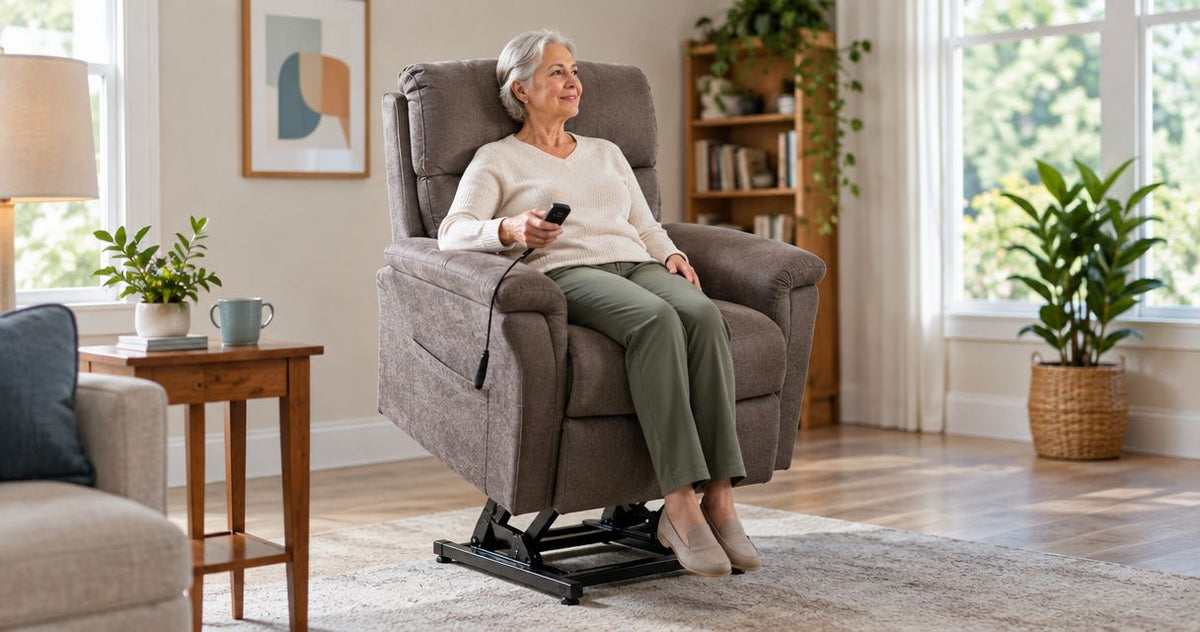
Motor count decides how many parts of a lift chair move on their own, not how strong the lift is. Most lift chairs need one motor to power a combined lift-and-recline motion, and that single-motor design covers the majority of chairs sold in 2026. Dual-motor lift chairs use a second motor so the backrest and footrest move independently of each other, and lay-flat models add a third or fourth motor for the headrest and lumbar section. The catch: adding motors buys independent adjustment, not a stronger lift or automatically more comfort, and each added motor is one more part that can eventually need service.
- Most lift chairs need one motor for a combined lift-and-recline motion in 2026.
- Dual-motor lift chairs move the backrest and footrest separately, like the GrandNest 500 lb model.
- Lay-flat lift chairs use three or four motors to add headrest and lumbar control, like the LuxQuad 4-motor chair.
- More motors add independent adjustment and often a higher weight capacity, not automatic comfort.
Why this matters
Picking the wrong motor count is the most common mistake people make when they shop for a lift chair. Buy a single-motor chair expecting the footrest to drop while the backrest stays upright, and you'll find both move together, whether you want that or not. Buy a four-motor lay-flat chair when a simple one-motor model would have covered daily use, and you're paying for adjustment you never touch.
Edward Creation stocks all four motor tiers, and the right one depends on how many sections of the chair a person actually needs to control on their own. Dual-motor lift chairs solve the most common complaint: wanting to recline the back without the footrest popping up at the same time.
How many motors does a lift chair need?
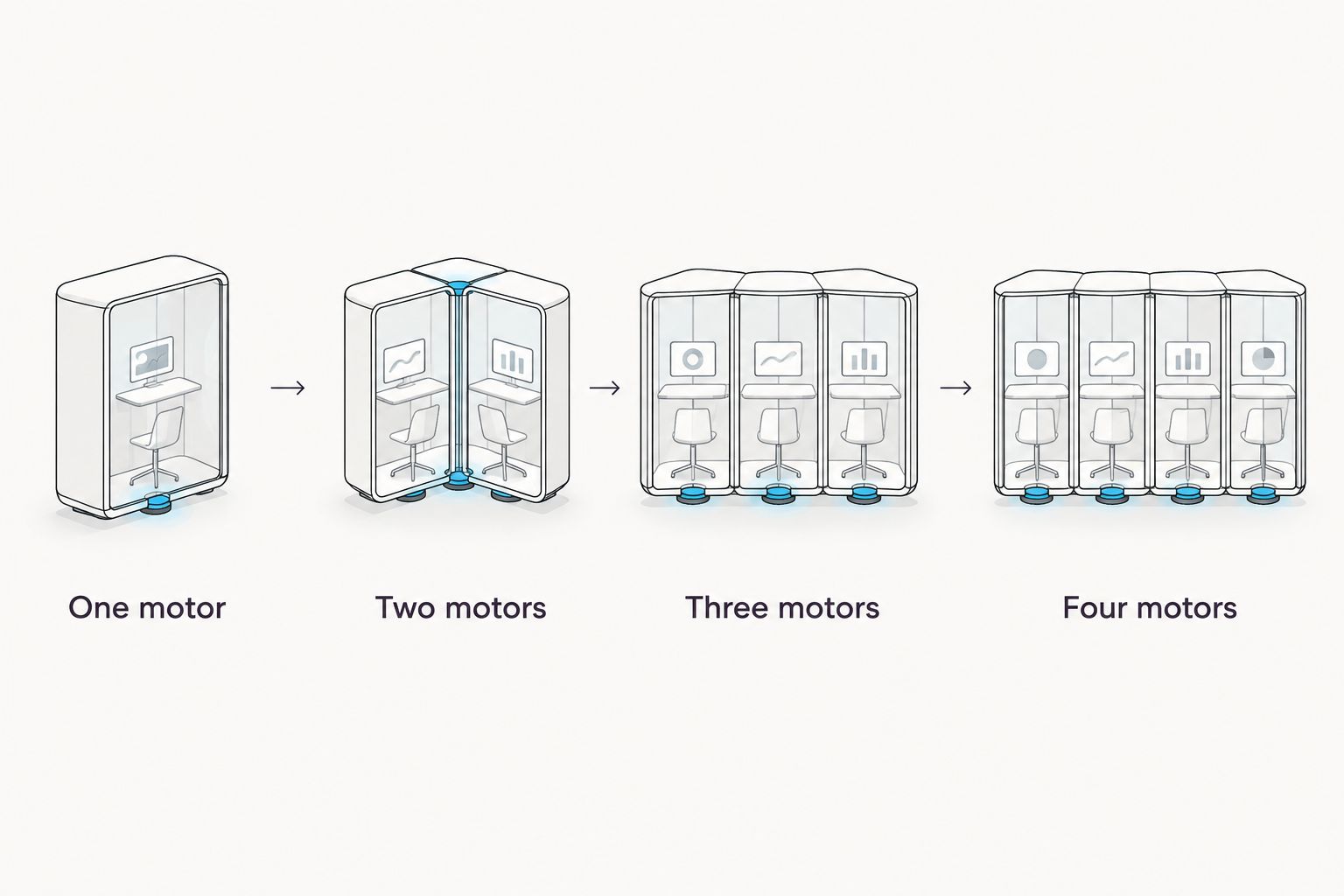
The answer depends on how many sections you want to move independently. Here's how the four tiers break down:
| Motor count | What moves independently | Best for |
|---|---|---|
| 1 motor | Seat lift and recline move as one motion | Simple daily use, tighter budgets |
| 2 motors (dual) | Backrest and footrest move separately from the lift | Reclining without disturbing footrest position |
| 3 motors | Adds independent headrest tilt | Extra neck and upper-back support |
| 4 motors | Backrest, footrest, headrest, and lumbar all move independently for a lay-flat position | Sleeping upright or lying nearly flat in the chair |
A one-motor lift chair and a four-motor lay-flat lift chair can look nearly identical in a photo. The difference only shows up when you press the remote.
Single-motor lift chairs: one motion for lift and recline
A single-motor lift chair ties the backrest angle to the lift mechanism, so pressing recline lowers the back while the footrest often rises in the same movement. This is the simplest mechanical layout and it's what most first-time lift chair buyers end up with. It works fine for someone who mainly wants help standing up and a comfortable recline for TV or reading. Verdict: Buy if you want one motion, less to learn, and don't need the footrest to move on its own.
Dual-motor lift chairs: independent backrest and footrest control
A dual-motor lift chair splits the backrest and footrest onto separate motors, so you can drop the footrest without reclining the back, or recline without raising your legs. This is the tier most caregivers recommend for people who nap in the chair or who need to elevate their legs for circulation without lying all the way back. The GrandNest dual-motor lift chair pairs this control with a 500 lb weight capacity and a footrest extension, which is typical of how dual-motor models get built for bigger frames. Verdict: Buy if independent leg elevation matters more than a lay-flat position.
Three- and four-motor lay-flat lift chairs: full flat positioning
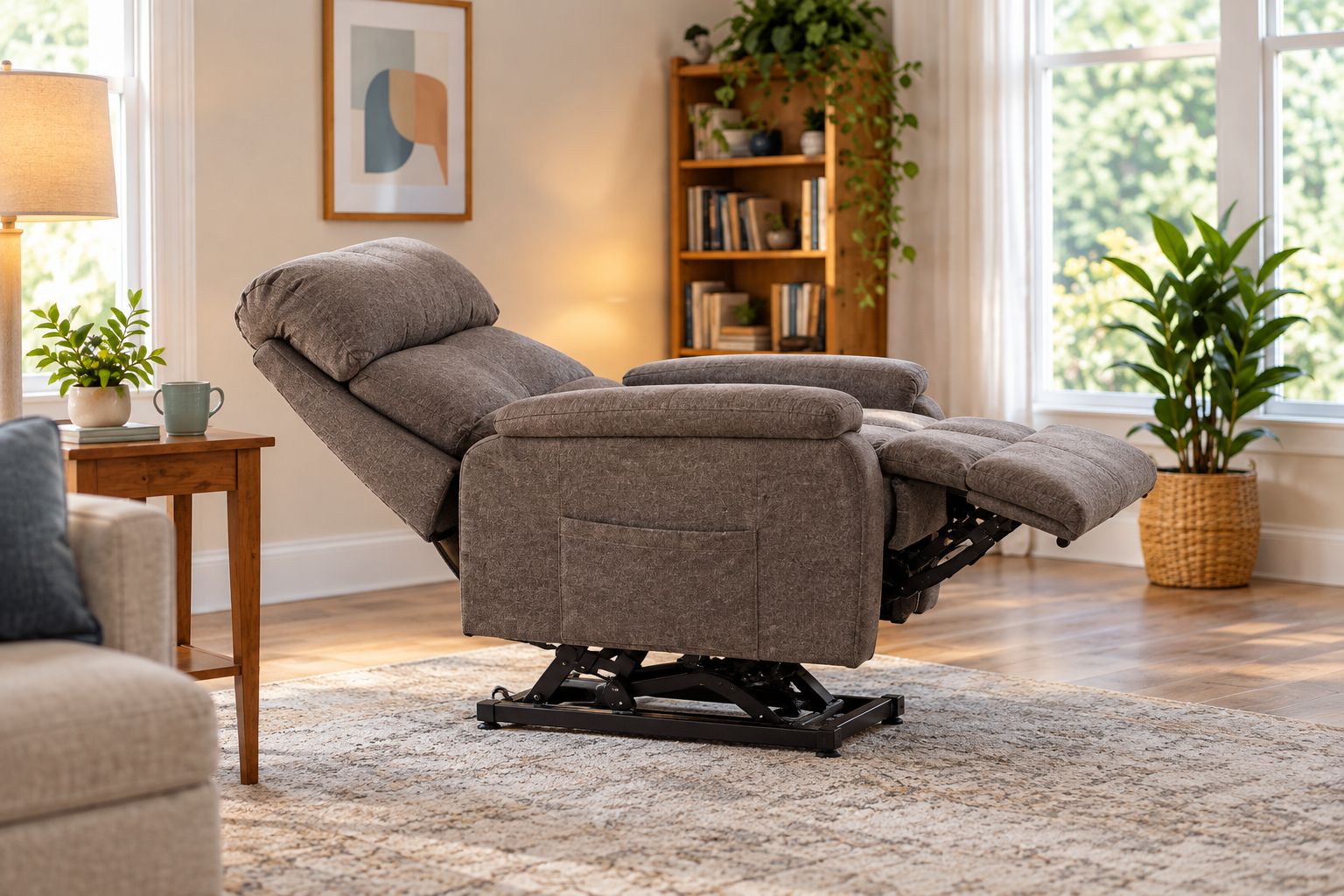
Three-motor chairs add independent headrest tilt on top of dual-motor backrest and footrest control, useful for anyone who needs extra neck support without changing the whole recline angle. Four-motor lay-flat chairs go further: the backrest, footrest, headrest, and lumbar section all move on separate motors, letting the chair flatten out close to a bed position rather than stopping at a normal recline. The LuxQuad 4-motor lift chair is built for exactly this, and lay-flat frames like it tend to run larger overall to support the flat position. Verdict: Buy if someone sleeps in the chair overnight or needs a near-flat position for medical reasons; Skip it if a normal recline angle already covers daily use.
Why motor count varies
Motor count isn't random. It tracks a handful of specific features and needs:
- Weight capacity — heavier-duty frames, including 500 lb models, are more often built with dual motors and reinforced actuators.
- Lay-flat or zero-gravity design — any chair that reclines past a normal angle needs at least a second motor to keep the footrest and backrest in proportion.
- Independent headrest or lumbar adjustment — each additional independently moving section is its own motor, which is why lay-flat chairs top out at three or four.
- Footrest extension — chairs with an extended footrest for taller users usually pair it with a second motor so the extension doesn't fight the recline motion.
- Battery backup needs — chairs with more motors and larger frames are more likely to ship with a back-up battery option, since a stuck four-motor chair during a power outage is a bigger problem than a stuck single-motor one.
If you're not sure which tier fits, start with the frame size and weight capacity before the motor count — choosing the right lift chair weight capacity narrows the field faster than comparing motors first.


Related questions
What's the difference between a dual-motor and single-motor lift chair?
A dual-motor lift chair moves the backrest and footrest on separate motors, so you can recline without the footrest rising or drop the footrest without reclining. A single-motor chair moves both together in one connected motion, which is simpler but less flexible for leg elevation.
Can a single-motor lift chair still lay flat?
A single-motor lift chair generally cannot reach a true lay-flat position because the backrest and footrest are mechanically linked and stop at a standard recline angle. Lay-flat positioning requires the extra independent motors found in three- and four-motor chairs.
FAQ
How many motors does a lift chair need?
Most people only need one motor for a standard lift-and-recline lift chair used for sitting, reclining, and standing assistance. Add a second motor if you want the footrest and backrest to move independently, and a third or fourth motor only if you need headrest control or a lay-flat position.
What is a dual-motor lift chair?
A dual-motor lift chair has two separate motors, one for the backrest and one for the footrest, so each section moves on its own. This lets you elevate your legs without reclining the back, which single-motor chairs can't do.
Is a 4-motor lift chair better than a 2-motor lift chair?
A 4-motor lift chair isn't better, it's built for a different job: reaching a lay-flat position with independent headrest and lumbar control. A 2-motor chair already covers independent backrest and footrest movement, which is what most people who nap or elevate their legs actually need.
Do more motors make a lift chair heavier?
Yes, lay-flat chairs with three or four motors are typically built on larger, heavier frames to support the flat position and the added actuators. Dual-motor big and tall models, like the GrandNest at 500 lbs capacity, also tend to run larger than basic single-motor chairs.
What is the difference between a lay-flat lift chair and a standard lift chair?
A lay-flat lift chair uses three or four motors to let the backrest, footrest, headrest, and lumbar section move independently until the chair sits close to flat. A standard lift chair stops at a normal recline angle because the backrest and footrest are mechanically linked.
Do dual-motor lift chairs need a battery backup?
Dual-motor lift chairs don't require a battery backup to operate, but it's a common add-on because getting stuck mid-recline during a power outage is harder to manage with two independently moving sections. Battery backup options exist for lift chairs at multiple motor tiers.
Which motor count is best for elderly users with limited mobility?
A dual-motor lift chair is the most common recommendation for elderly users with limited mobility because it lets them elevate their legs for circulation without fully reclining, without paying for headrest or lumbar motors they may not need. A single-motor chair still works fine for lighter mobility needs.
One last thing
The motor count on a lift chair is really a proxy for how many sections you can adjust without getting up to reposition something by hand. If you keep finding yourself wishing the footrest would drop without the backrest moving, or the headrest would tilt on its own, that's the signal to move up a tier, not to assume the chair you have is broken. Edward Creation lists the motor count directly in the specs for each lift chair, so it's worth checking before you compare anything else, including the recline angle or the upholstery.