
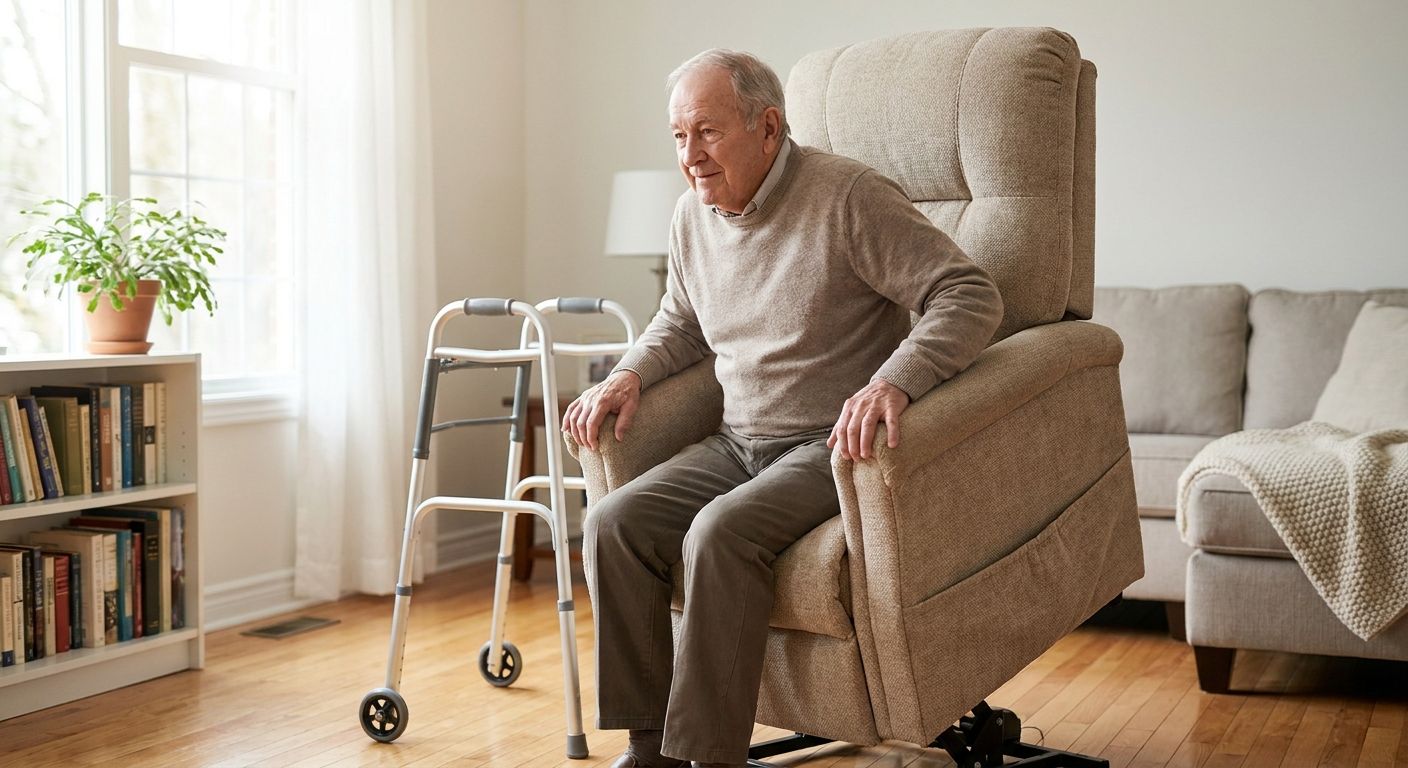
Parkinson's disease turns a simple stand-up into a physical negotiation — tremors, muscle rigidity, and sudden blood pressure drops make the wrong recliner a fall risk instead of a comfort upgrade. This guide covers what actually matters when picking a lift chair for Parkinsons disease and which 2026 models hold up under real symptoms, not just marketing copy.
- ZeroG Zero Gravity Lift Chair Recliner is the safest pick for a lift chair for Parkinsons disease with orthostatic dizziness — buy it.
- Titan Lift Chair's 500 lb frame and 28-inch seat handle caregiver-assisted transfers without wobble in 2026.
- Skip any lift chair with small toggle remotes — Parkinson's tremor makes fine buttons unusable.
- StashEase Oversized Lift Chair with Battery Back-up keeps the seat lowerable during a power outage.
Why this matters
Parkinson's disease doesn't just slow movement — it changes how a body handles the transition from sitting to standing. Tremor and bradykinesia make small buttons and fast motions unreliable, rigidity stiffens the joints a chair needs to guide, and orthostatic hypotension can cause a sudden head rush the moment someone stands up.
A lift chair built for this has to do more than raise a seat. It has to lift slowly and predictably, give the hands something they can actually control, and let the body adjust before gravity takes over. Get any of that wrong and the chair becomes the thing that causes the fall it was bought to prevent.
Who this is for
This guide is for caregivers and family members buying a lift chair for someone with Parkinson's disease who is still ambulatory but struggles with the sit-to-stand transition — not for patients who are bedridden or need hospital-grade lift equipment. If the person you're shopping for lives at home, gets up and down from a chair multiple times a day, and has had a near-fall during that transition, this is the buyer profile. Start with Edward Creation's full lift chair collection and use the criteria below to narrow it down.
What to look for in a lift chair for Parkinson's disease
Slow, steady lift speed
A jerky or fast-lifting motor can startle someone mid-tremor and throw off their balance right when they need to plant their feet. Look for chairs described as having smooth, single-speed lift motion rather than models marketed for quick lift cycles — speed is not the selling point here, control is.
Oversized, simple remote controls
Fine motor control is one of the first things Parkinson's affects, and a remote with small, closely-spaced buttons turns every recline adjustment into a frustrating fumble. Prioritize chairs with large, high-contrast buttons grouped clearly by function over anything with a dense multi-button panel.
Wide, stable base and armrests
Freezing episodes and balance loss mean the person may grip the armrests hard or lean unevenly while transferring. A wide, low center-of-gravity base resists tipping in a way a narrow-footprint recliner can't, and firm armrests give hands something reliable to push against.
Battery backup power
If the power goes out mid-recline or mid-lift, a chair without backup power can strand someone in a reclined position with no manual way down. A built-in battery backup means the chair still functions long enough to get the person safely upright.
Zero-gravity or lay-flat recline
Orthostatic hypotension in Parkinson's disease can cause dizziness on quick position changes. A true zero-gravity recline redistributes weight gradually instead of dropping the torso fast, which gives blood pressure time to adjust before the person stands.
High weight capacity and reinforced frame
Caregivers frequently assist physically during a transfer, which briefly puts more combined weight on the chair than the seated person alone. A frame rated well above the user's body weight — 400 lbs and up — has margin for that assist without stressing the lift mechanism.
Top picks for 2026
ZeroG Zero Gravity Lift Chair Recliner — the safe pick
This chair's true zero-gravity recline is the single biggest reason it lands at the top of this list. The gradual weight redistribution reduces the head-rush effect that orthostatic hypotension causes in Parkinson's patients, and the lift motor moves at a controlled, even pace rather than snapping into position.
Verdict: Buy. ZeroG Zero Gravity Lift Chair Recliner is the chair to default to when dizziness on standing is the main safety concern.
Titan Lift Chair, 28-inch wide seat with foot rest extension — the stability pick
Rated to a 500 lb capacity with a 28-inch seat, this chair is built for households where a caregiver needs to physically assist the transfer without worrying about the frame. The extended foot rest also gives longer-legged users more support during the lay-back phase, which matters when rigidity limits how someone repositions their legs mid-recline.
Verdict: Buy. Titan Lift Chair with foot rest extension is the pick when caregiver-assisted transfers happen daily.
StashEase Oversized Lift Chair with Battery Back-up — the power-failure safety net
The built-in battery backup is the whole reason this chair earns a spot here. If the power drops while the chair is reclined, the backup keeps the lift function operational long enough to bring the seat back to an upright, exit-ready position instead of leaving someone stranded.
Verdict: Buy. StashEase Oversized Lift Chair with Battery Back-up is worth the upgrade in any home with unreliable power.
Royalease Lift Chair — the budget pick with heat and massage
This one trades some of the oversized-frame bulk of the picks above for a lower price point and adds a 9-zone heated massage backrest, which helps with the muscle rigidity that comes with Parkinson's disease. It's not built for heavy caregiver-assisted transfers the way the Titan is, but for a lighter user who mainly needs rigidity relief and a simple lift, it does the job.
Verdict: Consider the Royalease Lift Chair if budget is the deciding factor and daily physical assistance isn't part of the routine.


What to avoid
- Chairs with small, closely-grouped toggle remotes — they look sleek in product photos but are unusable for anyone with hand tremor.
- Anything marketed for "quick lift" speed — a fast recliner motor is a selling point for someone in a hurry, not for someone with balance issues.
- Lift chairs with no manual release and no battery backup — if the only way down is electric power that just failed, that's not a safety feature, it's a design gap.
Verdict comparison
| Chair | Seat width | Weight capacity | Battery backup | Recline type | Verdict |
|---|---|---|---|---|---|
| ZeroG Zero Gravity Lift Chair Recliner | Standard | Not oversized-rated | No | True zero gravity | Buy |
| Titan Lift Chair (28-inch) | 28 in | 500 lbs | No | Lift with foot rest extension | Buy |
| StashEase Oversized Lift Chair w/ Battery Back-up | Oversized | High capacity | Yes | Standard lift recline | Buy |
| Royalease Lift Chair | Standard | Standard | No | Heat and massage recline | Consider |
FAQ
What's the best lift chair for Parkinson's disease patients in 2026?
The ZeroG Zero Gravity Lift Chair Recliner is the strongest overall pick in 2026 because its true zero-gravity recline reduces the dizziness spike common with orthostatic hypotension in Parkinson's disease. The Titan Lift Chair is the better choice specifically for households where a caregiver physically assists the transfer.
Is a zero gravity lift chair better than a standard recliner for Parkinson's?
Yes, for users with orthostatic hypotension, because zero gravity recline shifts body weight gradually instead of dropping the torso quickly. A standard recliner's faster position change can trigger the dizziness that leads to falls.
How much does a lift chair for Parkinson's disease cost?
Prices on Edward Creation's 2026 lineup range from around $321 for the Royalease Lift Chair to $928 for the ZeroG Zero Gravity Lift Chair Recliner. Battery backup and oversized frames typically push the price toward the higher end of that range.
Do lift chairs help with orthostatic hypotension in Parkinson's?
A slow, gradual recline and lift cycle gives blood pressure time to adjust before standing, which is the main reason zero-gravity and lay-flat lift chairs are recommended over fast-motion recliners. The chair doesn't treat the condition, but it removes one of the triggers for a dizzy spell.
What weight capacity should a lift chair have for caregiver-assisted transfers?
Look for a frame rated at 400 lbs or higher even if the user weighs far less, because a caregiver's assisting weight briefly adds to the load. The Titan Lift Chair's 500 lb capacity is built with exactly this scenario in mind.
Is battery backup necessary on a lift chair?
It's necessary in any home with occasional power outages, because a chair without backup power can leave someone stuck in a reclined position with no way to lower or raise it. The StashEase Oversized Lift Chair with Battery Back-up solves this directly.
Can a lift chair help prevent falls in Parkinson's patients?
A well-designed lift chair reduces fall risk during the sit-to-stand transition by controlling the speed and angle of the lift instead of leaving the person to push up unassisted. It doesn't replace other fall-prevention measures like grab bars or a caregiver pager system.
What's the difference between a lay-flat lift chair and a zero-gravity lift chair?
A lay-flat lift chair reclines to a near-horizontal position for sleeping or extended rest, while a zero-gravity chair positions the legs above heart level at a gentler angle to redistribute weight evenly. For Parkinson's patients managing dizziness, zero-gravity recline is usually the more relevant feature.
One last thing
The detail most buyers overlook isn't motor strength or price — it's remote button layout. A chair with large, clearly separated up/down buttons prevents the accidental full-recline that happens when a tremor hits a small toggle switch, and that single design choice matters more day-to-day than almost any spec on the page.